Fine, Charlie. Fine. Let's Build Your Dreams.
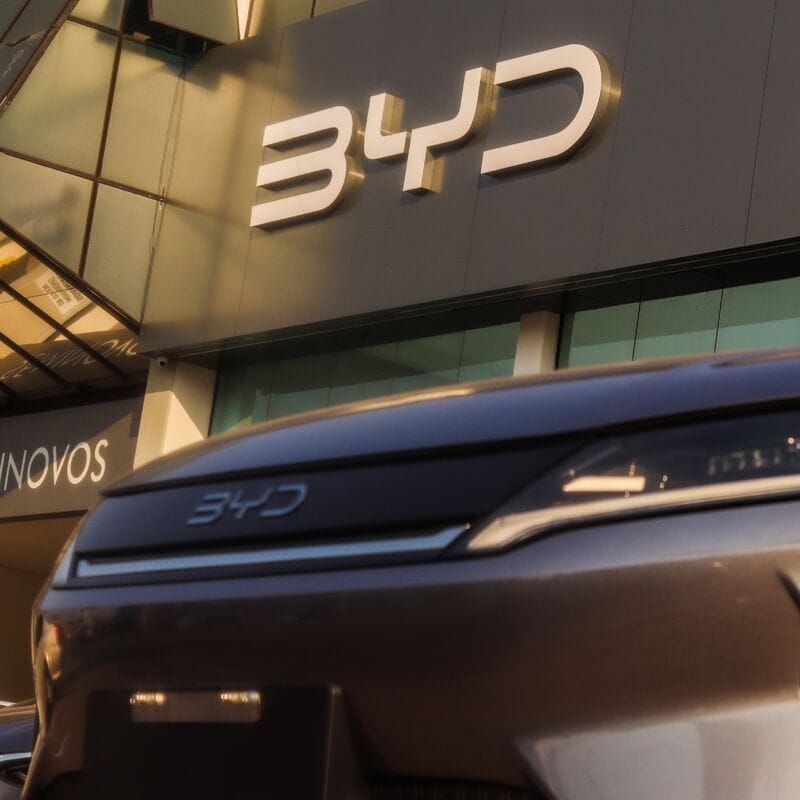
There is a version of this story where it never happens.
Where Warren Buffett - the man who spent 40 years telling anyone who'd listen that he doesn't invest in things he doesn't understand - looks at a battery company in Shenzhen, China, run by a man he's never heard of, in an industry he's never touched, in a country he's barely invested in, and says: No, thank you. I'll have another Coca-Cola.
That version of the story would have cost Berkshire Hathaway $8 billion in opportunity.
Instead, he listened to Charlie.
And Charlie, as usual, was right.
The Smartest Man in the Room Needed a Translator
It's 2007. David Sokol, a Berkshire-affiliated executive with a reputation for finding things other people miss, lands in Shenzhen on what most people in his position would treat as a due diligence formality. Kick the tires, shake some hands, fly home, write a polite report saying the numbers looked fine and the factory smelled like machine oil.
He did not write that report.
He called Charlie Munger and said, in effect: You need to come here yourself.
Now, Charlie was 83 years old at the time, half blind, and had spent most of the previous decade perfecting the art of sitting very still in a chair and being the second-smartest person in any room he entered - the first being himself, with Buffett a generous half-step behind. He did not need to fly to China to look at a battery factory.
And yet, he flew to China.
What he saw when he got there was Wang Chuanfu, BYD's founder, doing something Charlie had never seen a CEO do.
One of the engineering teams was stuck. They couldn't replicate a particular component. Wang Chuanfu walked over, looked at the problem, took the component away, came back a short while later, and handed them a working version he had assembled himself.
The CEO. On the factory floor. Making the part.
Charlie went home and told Buffett that Wang Chuanfu was a combination of Thomas Edison and Jack Welch.
Warren, to his enduring credit, said: Who?
The Reluctant Billionaire and His Very Persistent Friend
Here is something the financial press tends to gloss over: Warren Buffett did not want to make this investment.
This is important, because the received wisdom is that Buffett and Munger are a unified oracle - a two-headed value investing deity who speaks in synchronized aphorisms from a compound in Nebraska.
In reality, they disagreed constantly, argued in the specific way that very old friends argue, and occasionally one of them simply refused to budge until the other gave in.
On BYD, Charlie refused to budge.
Buffett's objection was principled, not petty. He has a rule, one of the few he's never bent, about staying inside his circle of competence. He understood Coca-Cola because people were always going to want a cold, sweet drink. He understood insurance because people were always going to want to protect things they cared about.
He understood American consumer brands he was an American consumer, and he'd spent seventy years watching how they behaved.
A Chinese electric vehicle manufacturer that had started as a battery company and pivoted into automobiles through sheer managerial force of will, in an industry being disrupted by technology he didn't fully follow?
That is a circle of competence problem, and Warren knew it.
Munger's counter-argument, loosely translated from the original Munger, was: I've looked at the man. Back off.
In September 2008 – the same week Lehman Brothers filed for bankruptcy, while every sane person on Wall Street was trying to get money out of things – MidAmerican Energy, a Berkshire subsidiary, wired $230 million to Shenzhen for a 10% stake in BYD at roughly HK$8 per share.
It was either genius or madness, and for the first few years, it was genuinely unclear which.
Forget the Car. Buy the Factory. Maybe the Road Next.
BYD stands for Build Your Dreams, which sounds like a motivational poster in a mid-tier co-working space. In practice, it describes something considerably more ferocious.
Wang Chuanfu founded the company in 1995 as a rechargeable battery manufacturer – the invisible infrastructure inside the thing inside the thing. He built it in Shenzhen because manufacturing costs were low, and because a man of his particular disposition needed a place where he could build things very quickly without too many people telling him why it couldn't be done.
By 2003, he decided to build cars. Not because there was an obvious connection. Not because his investors asked for it. Because he looked at the automotive industry, identified it as a manufacturing problem, and concluded that manufacturing problems were what he did for a living.
This is the part that Munger understood and most Western analysts missed completely.
BYD is not a car company. It is not even, really, a battery company. It is a manufacturing organism – vertically integrated to a degree that makes most of its competitors look like a man who's bought a flat-pack wardrobe and lost the instructions.
BYD makes its own batteries. Its own semiconductors, where possible. Its own components, its own tooling, its own supply chain from raw material to finished vehicle. It controls the inputs in a way that makes it structurally cheaper to produce and faster to iterate than almost anything built in the Western tradition of outsourced, just-in-time assembly.
When a global chip shortage paralyzed the automotive industry in 2021 and half of Detroit was producing cars without the parts they needed, BYD kept building. Because when you make your own chips, you don't queue for someone else's.
That is the engine. Not the brand. Not some proprietary software platform. The ability to produce extraordinarily complex things, at scale, faster and cheaper than anyone else, while being immune to the supply chain panics that routinely kneecap competitors.
You are not buying a car. You are buying the factory that could, if asked nicely, probably build the road as well.
Thirteen Very Quiet Years
BYD's share price, for the first several years after Berkshire's investment, did approximately nothing exciting. It bumped along. It went up a bit. It came back down. If you had checked in on this investment in 2013 and written a report card, it would have read: has potential, needs to apply himself.
Buffett, who once said his preferred holding period is forever, and meant it, did not check in. Neither did Munger. They had bought something they believed in and they went back to Omaha to do other things.
Then the world started changing.
Governments began mandating the end of combustion engine sales. Emissions targets tightened. Subsidies for electric vehicles spread like a policy idea whose time had clearly come. And Tesla, which had spent a decade being laughed at as a vanity project for Silicon Valley optimists, proved that consumers would buy an electric car if someone could make one that was genuinely good.
BYD had a 16-year head start on the battery technology. It had the manufacturing infrastructure. It had Wang Chuanfu, who had been preparing for this exact moment since before most EV startups had incorporated.
The stock went from HK$8 at purchase to a peak of roughly HK$333 in late 2021. 13 years. A 35-fold return. A position worth north of $8 billion, on a $230
million ticket bought in the middle of a financial crisis, in a country the investors had never seriously backed before, in an industry they didn't fully understand.
In 2023, BYD surpassed Tesla as the world's largest electric vehicle manufacturer by volume. The company Wang Chuanfu built in Shenzhen to solve a manufacturing problem now sells more electric cars than the company Elon Musk built in California to save the planet.
From 2022, Berkshire began trimming methodically – not fleeing, just harvesting – until their complete exit in 2025 from what is now a genuine global industrial titan.
Genius, Stubbornness, and Something You Won't Find on a Bloomberg Terminal
The obvious one is the trend. They saw the electric vehicle transition coming early enough to position without needing to be precise about the timeline. They didn't need to know that 2023 was the year BYD would top the global charts. They just needed to own the best-positioned company for when it happened. In investing, being roughly right early is worth considerably more than being precisely right late.
The less obvious one is the person. Buffett and Munger have always claimed they invest in management. What makes BYD remarkable is that they applied that principle across every barrier that normally makes Western investors retreat into the comfort of what they know – language, culture, geography, an entirely different business tradition.
Munger looked at Wang Chuanfu and made a human judgment about an extraordinary operator.
He trusted it.
He was correct.
The one nobody talks about is the ego management. Buffett openly admitted he didn't understand BYD. He bought it anyway, because he understood that Munger understood it, and that trusting the right person to cover your blind spot is its own form of analytical edge. Most fund managers cannot do this. Their identity is too bound up in being the one who knows. Buffett had been in business with Munger long enough, and was secure enough in his own judgment, that he could defer on something specific without surrendering his intelligence in general.
That is rarer than it sounds. That, as much as anything, is why the cheque got written.
The Epilogue
Charlie Munger died in November 2023, 33 days before his hundredth birthday. He had lived long enough to see BYD become one of the defining industrial stories of the twenty-first century, and long enough to watch the investment he'd strong-armed his partner into making profit to the tune of $8 billion.
He was, by most accounts, quietly pleased. Not about the money specifically, as Charlie had been wealthy long enough that large numbers had stopped being surprising, but about the story. About having looked at a man in a factory in Shenzhen and understood, before most of the world did, exactly what he was capable of building.
In the grand tradition of Berkshire Hathaway, nobody threw a party. There was no press release. Buffett mentioned it appreciatively in a shareholder letter. Charlie described Wang Chuanfu one last time as the most remarkable businessman he had ever encountered. And then they got on with other things.
$230 million in. $8 billion out.
In Omaha, they call that a good investment.
In Shenzhen, they call it Tuesday.