Formula 1: How to Win Without a Car
Benjamin Graham used to say that in the short run, the market is a voting machine, but in the long run, it's a weighing machine. It's a comforting thought for the fundamentalist, but in 2006, the world was intoxicated. We were drifting through that pre-crash sweet spot, drunk on cheap credit and the belief that property prices could only go up.
Most folks were looking at the tech "disruptors," but a group of gentlemen in London were looking at something much more visceral. They decided to treat the world's most glamorous sport like a rental car, drove it at 200 mph for a decade, and returned it with the engine smoking and the tires bald, and walked away pocketing $4.5 billion. No racing licence required.
The Anatomy of the Buy
In a standard purchase, you bring your cash to the table. In a Leveraged Buyout (LBO), you bring a suitcase and a map to someone else's gold mine.
Here's how it works in practice:
Imagine you want to buy a pub - packed every Friday, reliable darts league, same loyal crowd for twenty years.
You don't have the cash to buy it outright, so you ask the bank to buy it for you.
"The pub will pay you back," says you.
The bank looks at the pub's books, sees guaranteed Friday nights stretching into the horizon, and says yes. You sign the papers. The loan doesn't sit on your books. It sits on the pub's. You own the pub. The pub owes the debt. You're in the clear.
CVC bought a 63.4% stake in Formula 1 for roughly $2 billion. But they only put up about $965 million of their own cash. The remaining $1.1 billion was borrowed from a consortium of banks.
Then, they created a shell company - Delta Topco - which took out the loans and used them to purchase F1. Once the acquisition closed, Delta Topco and F1 merged. The $1.1 billion debt that paid for the sport was suddenly sitting on the sport's own balance sheet, to be repaid from the sport's own earnings. The buyer got the asset. The asset got the bill. It's ultimate financial weight loss programme: the calories go to someone else.
What Made This Possible? (The "Moat")
Banks don't lend billions of dollars to just anyone. They lend to businesses with predictable, contractual cash flows - money that arrives reliably, rain or shine, regardless of whether the cars are any good that season.
In 2006, F1 was the perfect candidate for two reasons:
- The Concorde Agreement: This was a secret contract between the teams, the governing body, and the commercial rights holder that had been governing prize money distribution and race entry since 1981. It guaranteed the circus kept running. Teams might grumble. Drivers might retire. Schumacher was already gone. Didn't matter. The races would happen, and the contract said so in writing.
- Long-Term Broadcasting Deals: F1 had a thick stack of long-term broadcasting deals with television networks across Europe and Asia. Multi-year commitments, locked-in fees. To a bank looking at a loan application, those deals look almost identical to a government bond - someone has promised to pay, and they've signed their name to it. Ferrari could finish last in every race. Didn't matter. The cheques from the broadcasters were already in the post.
CVC realized that F1’s pub was pulling a very specific, very high-quality pint that could comfortably service a mountain of debt without the business collapsing underneath it. That's the moat. Not the brand, not the technology. Just a very reliable tap that never ran dry.
The Masterstroke: The Dividend Recap
This is where the anatomy gets interesting.
CVC didn't just wait 11 years, sell F1 and pocket the difference. They paid themselves along the way. Once the sport started making more money, they didn't use those extra earnings to pay off the loan. Instead, they went back to the banks and made a simple argument: "Look, the sport is making $300 million more than it was last year. That means it can handle even more debt."
The banks agreed, and CVC took out additional loans against F1's improved earnings and used that fresh cash to pay themselves a dividend. This is called a dividend recapitalization - essentially the financial equivalent of remortgaging your house to take a holiday, except the house is someone else's sport, and the holiday lasts a decade.
They did this more than once. By 2014, three full years before the exit to Liberty Media, CVC had recovered its entire $965 million initial investment. Every. Penny. Back.
And they still owned the sport.
The last 3 years of ownership were played entirely with house money. In poker terms, they'd already cashed out and were just running up the winnings. The $8 billion cheque in 2017, was at that point, almost a bonus.
The Status of the Books Today
By the time Liberty Media bought the keys in 2017 for $8 billion, the sport was a mess. There was no marketing department, no social media strategy, and the digital presence was stuck in the 90s. CVC had stripped the copper wiring out of the house while the lights were still on.
To be fair: they didn’t destroy Formula 1. The $8 billion price tag - 4 times what they paid - is not the biography of a ruined property. F1’s commercial bones were strong enough to absorb a decade of extraction without collapsing.
But it stagnated.
Global viewership was flat through most of the CVC years. The American market - 250 million people, a healthy appetite for motorsport, a complete indifference to F1 - was essentially untouched.
“Untapped commercial potential” was how Liberty’s own executives described what they’d inherited.
Untapped is a polite word for what CVC had left on the table.
Today, the books look fundamentally different. Liberty shifted from extraction to expansion. They used the cash flow to build a marketing department (which F1 literally didn't have under CVC), a digital streaming platform (F1 TV, launched in 2018), and an American footprint that hadn't existed when they arrived - driven in no small part by Netflix's Drive to Survive, which premiered in 2019 and introduced the sport to an audience that had never sat through a qualifying session in their lives.
American viewership grew 36% between 2018 and 2022, per Nielsen data in Liberty's own investor materials.
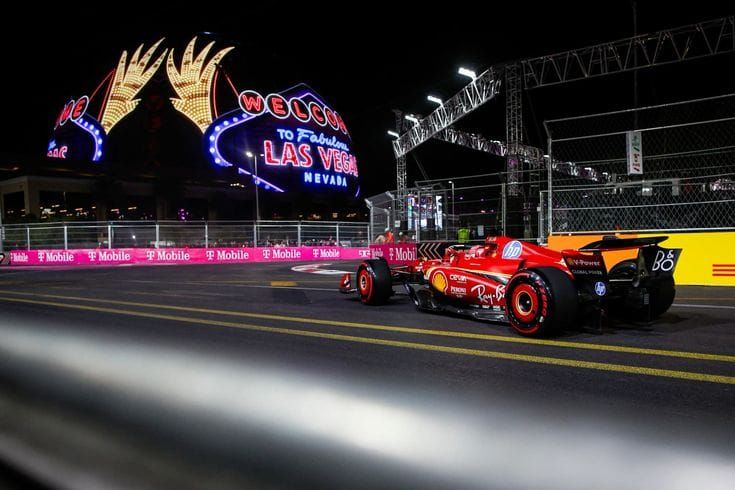
Las Vegas got a street circuit.
Miami got one too.
The debt is still there - Formula 1 remains a leveraged business - but the Enterprise Value has ballooned because the pub is now serving a lot more than pints. It's a global media brand.
So, Who Actually Won?
CVC.
Obviously and completely.
They cleared a total profit of roughly $4.5 billion from an initial outlay of $965 million, using a structure where the asset itself bore most of the financial risk. They didn't leave behind a better sport. They left behind a masterclass in capital efficiency.
The more precise question is what an LBO structure actually selects for when it lands on a sports property: predictable contracted cash flows, governance weak enough to permit financial engineering, and enough commercial resilience that the extraction doesn't kill the host before the exit.
F1 in 2006 had all three. The structure worked exactly as designed. The design was just indifferent to whether the sport grew.
Private equity's clock runs on a fund cycle of 7 to 10 years, and a dividend recap pays investors now. Building an American fanbase pays someone else's investors in 15 years. Those are 2 completely different games, and CVC played the one they were built to play.
In the world of high finance, you don’t win by crossing the finish line first. You win by owning the finish line.